Key Takeaways:
- The EU fully rolled out its digital Entry-Exit System (EES) on April 10, 2026
- Biometric checks (fingerprints + photo) now replace manual passport stamps for non-EU travelers
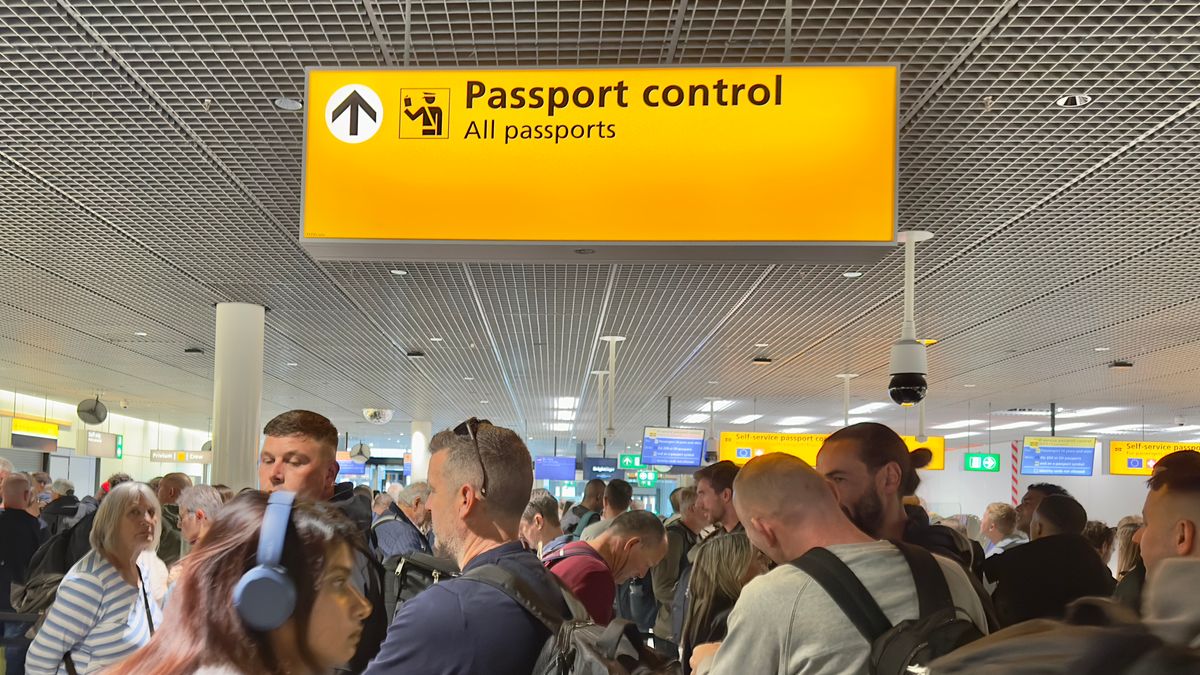
- Reports of hours-long lines and missed connections at major hubs like Lisbon Airport
- Applies to all 29 Schengen countries for stays up to 90 days in 180 days
What is the New Entry-Exit System?
The European Union has officially switched off manual passport stamping and turned on its new digital Entry-Exit System (EES). Fully rolled out on April 10, this system requires all non-EU residents—including Americans on holiday—to register their biometric data (fingerprints and a face photo) at the border.
The system records exact entry and exit times for every traveler. The EU claims the process takes just over a minute on average, but travelers on the ground are telling a very different story.
Traveler Reports: 'Longest Line I Have Ever Seen'
Footage from Lisbon Airport shows passengers snaking through terminals, waiting hours for biometric processing. CNN correspondent Clarissa Ward posted on Instagram: "I stood in the longest line I have ever seen in my life (no joke)." She added that elderly people, families with small children, and even passengers who missed their flights were stuck—while only TAP Portugal passengers near departure were allowed to cut.
"I saw lots of elderly people and families with small children. People who missed connections. Others who missed flights. Me included." — Clarissa Ward
However, experiences vary. One commenter noted a 5-10 minute wait and claimed the situation had improved, while others shared similar horror stories from airports across Europe.
Which Countries Are Using EES?
The system operates in 29 Schengen countries, including:
- Austria, Belgium, France, Germany, Greece, Italy
- Portugal, Spain, Sweden, Switzerland
- Norway, Iceland, Liechtenstein
- Bulgaria, Romania, Croatia (newer members)
All non-EU travelers entering this zone for up to 90 days will be processed through EES.
What Data Is Collected?
Upon entry, the system collects:
- Personal info: Full name, date of birth, nationality (from your passport)
- Travel records: Date and place of every entry and exit
- Biometric data: A digital photo and two fingerprints
- If applicable: Information on any refused entry
Summer Travel Concerns
The rollout comes just ahead of peak summer season. Travel experts warn that lines could grow significantly longer as airports become busier. The situation has reignited calls for better staffing, self-service kiosks, and advance data submission options that the EU has promised but not yet fully delivered.
Meanwhile, a separate new passport rule may block thousands of Americans from traveling starting June 1, adding another layer of stress for vacationers.
What Can Travelers Do?
- Arrive at least 3-4 hours early for international flights
- Check if your airline allows mobile check-in or advance data submission
- Prepare for potential missed connections—pack essentials in carry-ons
- Follow airport social media for real-time queue updates
The EES is designed to be more secure and efficient in the long run, but the transition period is proving painful. Until airports and systems fully adapt, patience will be the traveler's best companion.
"Standing in line is now part of the European travel experience—whether you like it or not."