Key Takeaways:
- Serbia granted citizenship to at least 44 Russians in early 2026 under a 'national interest' fast-track procedure.
- Recipients include individuals under US, EU, and Ukrainian sanctions.
- The EU warns this poses a security risk to the Schengen area, threatening Serbia's visa-free travel and accession talks.
Fast-Tracked Nationals Under Sanctions
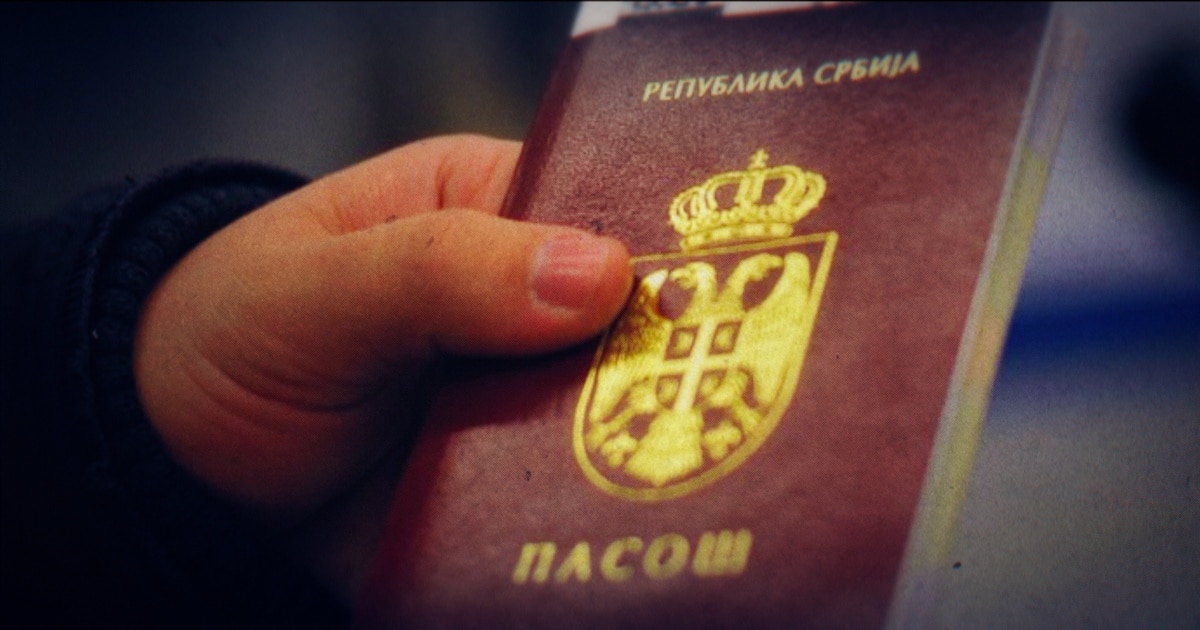
Despite repeated EU warnings, Serbia has granted citizenship to Russians—including those under international sanctions—through an expedited 'national interest' procedure. An RFE/RL investigation reveals that in the first five months of 2026 alone, 44 Russians received Serbian citizenship this way, with over 300 since 2022.
Notable Cases
Valery Kazikayev, under US sanctions since April 2023 for ties to Russian oligarch Alisher Usmanov, became a Serbian citizen on January 16, 2026. Usmanov, a Kremlin-linked billionaire, was blacklisted by the US in 2022. Kazikayev also owns a Slovak company under US sanctions.
Sergei Kondratenko, naturalized on November 13, 2025, faces Ukrainian sanctions for owning Royal Pay Europe, a company involved in a $35 million misappropriation case. Ukraine's anti-corruption court confiscated $44 million in assets from the firm in 2024.
Yakub Zakriev, nephew of Chechen leader Ramzan Kadyrov, was granted citizenship in April 2026 but revoked four days later—without explanation. Both Zakriev and Kadyrov are under US and EU sanctions for human rights abuses.
A Risk to EU Accession
Brussels views Serbia's fast-track citizenship as a 'potential security risk' because it grants Russians visa-free access to the Schengen area. An EU non-paper obtained by RFE/RL warns this undermines bloc efforts to restrict Russian travel post-invasion.
'Serbia is not only refusing to impose sanctions on Russia but is also circumventing EU foreign policy,' said Bojana Selakovic of the National Convention on the EU.
As an EU candidate, Serbia must align with EU policies, including visa restrictions on Russia. However, it maintains visa-free travel for Russians and has not joined sanctions over Ukraine. This inconsistency has stalled accession talks since December 2021.
Pressure from the EU
EU member states, led by Sweden, are pushing for stricter visa rules for Russians. In 2025, the Schengen area issued nearly 480,000 tourist visas to Russians—the highest since the invasion. Serbia's actions directly counter this trend.
'Serbia's tendency to grant citizenship that opens Schengen doors moves in the opposite direction,' said Marko Todorovic from the Center for European Policies. He warned of 'Russian influence over parts of the political and security apparatus.'
At the recent EU-Western Balkans summit, German Chancellor Friedrich Merz told Serbia it must choose between Russia and China or Europe, calling balance 'unacceptable.'
The Numbers: Russians in Serbia
Since 2022, thousands of Russians have entered Serbia visa-free, fleeing mobilization or seeking business opportunities. As of January 2025, over 48,000 held temporary residence permits.
- Accelerated citizenship grants spike: 44 in early 2026, up from fewer than 50 per year pre-invasion.
- Recipients bypass standard procedures, including background checks.
- EU warns this creates a backdoor for sanctioned individuals into Europe.
What This Means for Travelers
For travelers, Serbia's policy may tighten EU visa rules for all candidates, potentially affecting visa-free access for non-EU citizens. The EU is now monitoring Serbia's citizenship process closely.
'The rules are very strict and very clear,' emphasized Selakovic. 'All this is not in line with a country wanting to join the EU.'
Unless Serbia aligns with EU demands, its integration path—and visa-free benefits—could face further delays.