Key Takeaways:
- The UK's largest trading partner is the EU, with 41% of UK exports going to the bloc.
- A step-by-step approach, rather than a direct reapplication, is seen as the most realistic path to a closer UK-EU relationship.
- The Gibraltar-Spain deal offers a potential model for navigating border and sovereignty issues.
- Brexit has reduced the UK's GDP by an estimated 6–8% and failed to curb migration, undermining the original Leave campaign's claims.
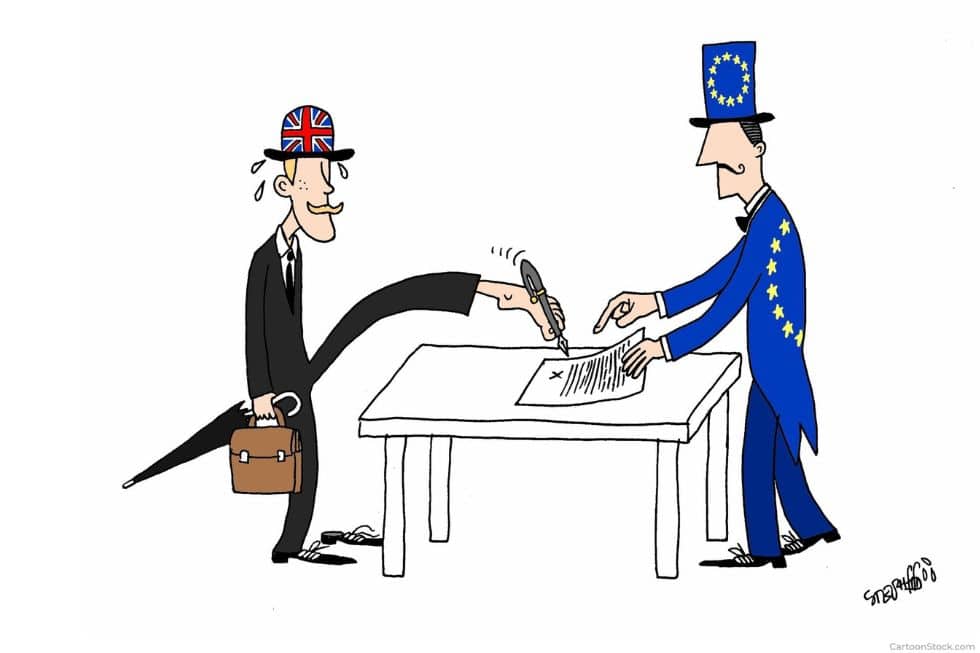
In January 1776, Thomas Paine published Common Sense, urging American colonists to fight for independence. Today, there is delicious irony in allying Paine with the reverse proposition of Brexit: the push for the UK to rejoin the EU. As Paine knew, timing is everything. That timing for the UK and the EU is now, when it comes to returning to a closer relationship, including full membership.
Trade and Economics: The Irrefutable Link
The biggest "pro" for a closer UK-EU relationship is trade. The UK's largest trading partner is the EU. In 2024, the EU accounted for 41% of UK exports and 51% of UK imports. The UK imports machinery, chemicals, transport equipment, and foodstuffs from the EU, while exporting similar goods, plus financial and travel services.
The costs of Brexit are now painfully clear. Based on almost a decade of data since the 2016 referendum, Brexit has reduced the UK's GDP by 6–8%. The UK's Office for Budget Responsibility forecasts that imports and exports will be an estimated 15% lower in the long run. These economic losses are a slow-burn reality that undermines the assumptions made by Leave voters.
Defense and Security: A Strategic Advantage
The UK has significant value-added capabilities for the EU in defense. With a 2024–25 defense budget of $80.7 billion, and partnerships like NATO, the Five Eyes Agreement, and the UK-US Technology Prosperity Deal, the UK brings substantial heft.
The traditional decision-making triangle between France, Germany, and the UK is now broken. A rapprochement with the UK would help facilitate defense debates, especially given the Russia-Ukraine War and the EU's own initiatives like the European Defence Fund (EDF) and Security Action For Europe (SAFE).
Sovereignty and Bureaucracy: The Enduring Downsides
In the UK's eyes, the biggest con is perceived expanded bureaucracy and loss of sovereignty. This was a key driver of Brexit. However, the EU has started a process of simplification, cutting red tape under pressure from member states. The "remain" camp never properly explained the complex, intangible benefits of EU membership—such as soft power, stabilization, and education—which remain real even if not easily quantified.
The Gibraltar Precedent: A Step-by-Step Model
Instead of a direct re-application, a step-by-step approach seems more sensible. The 2026 EU-UK-Gibraltar deal offers a useful proxy. The agreement aims to remove the border fence between Spain and Gibraltar, allowing Gibraltar to join the EU's Schengen area while respecting Spain's sovereignty claim. This model, though not yet scalable, shows how border and sovereignty issues could be handled gradually.
A New Communication Approach
The pro-EU camp needs a new communication approach that tackles sovereignty head-on. They must explain how, in the 21st century, the UK's sovereignty is better protected within the EU. As a small island nation of about 70 million people, the UK does not have much leverage against behemoths like China, the US, or Russia. The UK within the EU is much stronger than the UK all alone.
Former British foreign secretary David Miliband has insisted that the UK needs "national consensus" on rejoining the EU, but admitted this is a long-term goal. The pro-EU camp must also address issues like migration and bureaucracy, noting that the EU today is more realistic and effective than a decade ago.
The Future: Reuniting by Parliamentary Vote
Sovereignty in the UK lies with the Parliament. Therefore, an act passed by a simple majority suffices to reestablish closer ties with the EU. Just as the UK should follow its well-established rules, so should the EU. Returning to Paine's Common Sense, "the time hath found us," and we need to act now.
"There is a tide in the affairs of men which, taken at the flood, leads on to fortune; omitted, all the voyage of their life is bound in shallows and in miseries." – William Shakespeare
Note: This article was edited by Cheyenne Torres. The views expressed are the author's own.