Key Takeaways:
- Annual global migration has risen from 13 million in 2000 to 35 million today.
- The Middle East is the top destination, with 19 million migrants from South Asia since 2010.
- Europe sees high intra-regional mobility, thanks to the Schengen scheme.
- UK net migration peaked at 679,821 in 2023 but fell to 171,000 in 2025.
A New Era of Global Mobility
The world is on the move like never before. A groundbreaking study, using deep learning to analyze migration patterns, reveals that total global migration has nearly tripled since 2000. In 2023, approximately 35 million people relocated to a new country each year, up from just 13 million at the turn of the century.
This rise is not just a statistical blip—it is outpacing global population growth. "The world is becoming more mobile on average," conclude the researchers. The only exceptions were brief dips during the 2008 financial crisis and the COVID-19 pandemic, which temporarily halted cross-border flows.
What Drives the Surge?
Contrary to popular belief, the increase is not solely driven by sudden crises. According to Professor Guy Able of the International Institute for Applied Systems Analysis and the University of Hong Kong, "This upward trend appears to be driven by long-term demographic shifts and economic development."
Old data, based on five- or ten-year intervals, masked this reality. The new annual data paints a clear picture: migration flows have steadily accelerated since 2000, shaped by opportunity rather than just emergency.
Key Migration Corridors
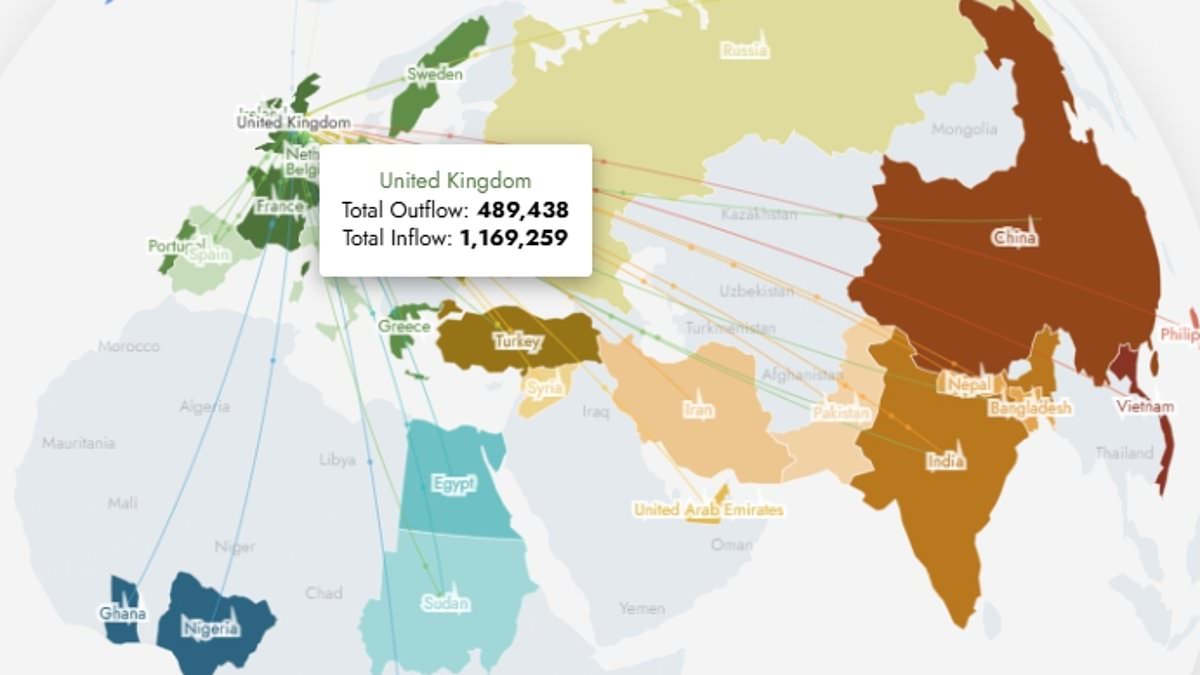
- Middle East: The Gulf States (Saudi Arabia, Qatar, Bahrain, UAE) have become a magnet since 2010, attracting 19 million migrants from India, Pakistan, and Bangladesh. Bangladesh alone sends roughly 300,000 people annually to Saudi Arabia.
- North America: Between 1990 and 2023, 13.6 million people moved from Mexico to the United States.
- Europe: Intra-regional migration is the heartbeat of the continent, with about 3 million people moving between European countries each year before 2020—boosted by the expansion of the Schengen Area.
Europe and the Schengen Effect
Europe stands out for its high rate of intra-regional migration, meaning people move largely within the continent. Since 2000, this flow has risen steadily, surpassing even the post-Soviet collapse movement of 1991 (2.02 million). Only sub-Saharan Africa during the 1990s—driven by horrors like the Rwandan Genocide—saw a higher intra-regional migration rate.
The Schengen Agreement has been a key enabler, allowing frictionless travel and work within much of the EU. This freedom is a major draw for third-country nationals as well, with many using a first EU entry as a stepping stone to longer stays.
United Kingdom: A Decade of Peaks and Falls
The UK has been a microcosm of global trends. Net migration hit a record 679,821 in 2023, ten times the level of 1990 (65,793). But, as of 2025, new data shows it has plummeted to 171,000—the lowest since 2012, excluding pandemic years.
Despite the recent dip, the University of Oxford's Migration Observatory notes the UK's foreign-born population (19%) is similar to Spain and Germany, but lower than Australia or Canada.
What This Means for Border Policies
This data challenges policymakers who viewed migration as static or crisis-driven. The reality is a long-term rise in mobility, with profound implications:
- Infrastructure: Countries must plan for sustained migration, not just spikes.
- Integration: High intra-regional mobility in Europe suggests a need for harmonized integration policies.
- Security: As numbers grow, balancing openness with border management becomes critical.
For travelers and expats, this means more competition for visas, but also more opportunities in a truly mobile world.
"Our annual data provides a clearer picture, revealing that this rate has actually risen since 2000." — Professor Guy Able
Stay tuned to SchengenTracker for updates on how these trends shape travel rules and border policies across Europe and beyond.