Key Takeaways:
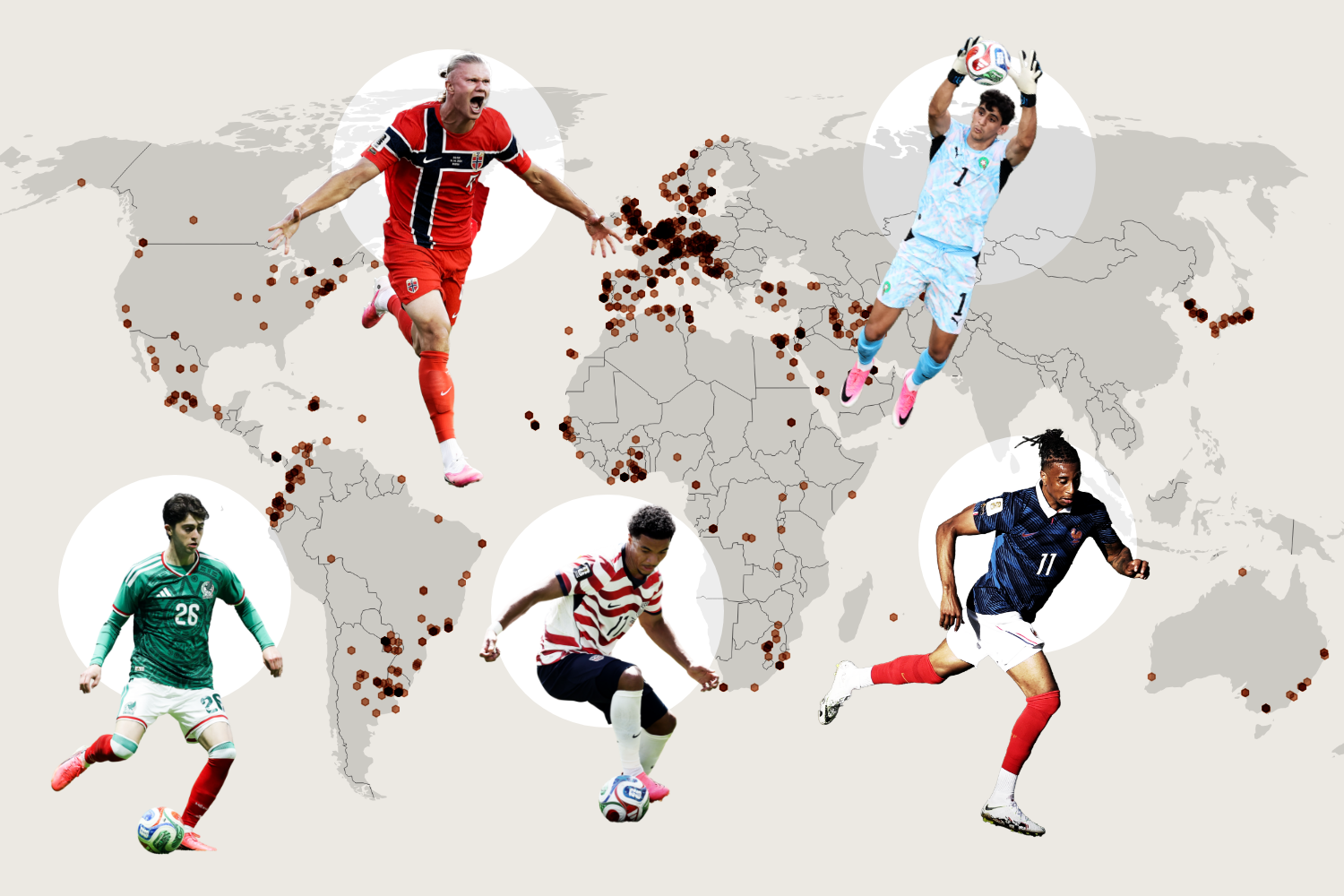
- A record 23.2% of players at the 2026 World Cup were born outside the country they represent, up from 16.5% in 2022.
- France is the top exporter of talent, with 99 players born there across all 48 teams.
- U.S. travel bans and visa restrictions block fans from Haiti, Iran, Senegal, and Ivory Coast from attending matches in the United States.
The Globalization of the World Cup
The 2026 World Cup, co-hosted by the United States, Canada, and Mexico, is the most global in history—not just in reach, but in roster composition. Over 23% of players were born outside the country they represent, a sharp rise from 16.5% in 2022 and just 5% at the first tournament in 1930. This surge is fueled by the expansion to 48 teams, allowing nations with large diasporas to qualify.
Haiti's squad exemplifies this trend. Sixteen of its 26 players were born abroad, mostly in North America and Europe, while only one player is based in Haiti. The team is led by a French coach who has never visited the country. This dependence on diaspora talent stems from Haiti's economic instability and gang violence, which have made it impossible to host home matches.
Why Diaspora Players Are on the Rise
FIFA's 2004 eligibility rules tightened requirements, demanding a "clear connection" through birth, ancestry, or five years' residency. This encourages naturalization based on heritage rather than financial incentives. Countries with small populations, like Curaçao (population 156,000), rely almost entirely on diaspora players—25 of its 26 squad members were born in the Netherlands.
Other teams with high foreign-born rates include:
- Democratic Republic of the Congo: 76.9%
- Morocco: 73.1%
- Algeria: 61.5%
- Bosnia and Herzegovina: 57.7%
- Tunisia: 57.7%
Conversely, nations like Austria, Brazil, Colombia, and South Africa field no foreign-born players.
France: The World's Soccer Talent Factory
France is the undisputed leader in exporting talent, with 99 players at the 2026 World Cup born there—including 54 from Greater Paris alone. This eclipses Greater London, which sent just 14 players. The trend reflects France's colonial history and its elite academies, which nurture players of diverse backgrounds.
Academy Powerhouses
European clubs dominate player development:
- Ajax Amsterdam: 17 alumni across five national teams
- Manchester City: Players in 10 different national teams
- Manchester United & Arsenal: Eight teams each
- Paris Saint-Germain: Seven teams
- Bayern Munich: Five teams
The Visa Wall: Fans Left Behind
Despite the teams being more international, the stands may look unchanged. The United States has imposed travel bans on Haiti and Iran, barring nearly all nationals from obtaining visas, with exceptions only for players and essential staff. Senegal and Ivory Coast face partial bans that suspend tourist visas.
Key restrictions:
- Haiti and Iran: Full visa bans, including for fans.
- Senegal and Ivory Coast: New tourist visas suspended since January 1, 2026.
- Algeria, Cape Verde, Tunisia, Senegal, and Ivory Coast: Required to post visa bonds of $5,000–$15,000, though this is waived for ticket holders who enrolled in FIFA Pass.
These barriers extend to co-hosts Canada and Mexico. Canada requires visitor visas from these same countries. Mexico waives visas for U.S. visa holders, but those banned from the U.S. must apply directly to Mexico. This contrasts sharply with 2018 Russia and 2022 Qatar, which offered visa-free entry for all ticket holders.
Real-World Impact
At least 15 Iranian officials were denied U.S. visas, and Iran's federation says FIFA revoked its ability to allocate tickets for U.S. games. Somali referee Omar Artan was denied entry in Miami over alleged terror ties. Iraqi striker Aymen Hussein faced seven hours of questioning upon arrival in Chicago.
A Tournament of Two Realities
The 2026 World Cup showcases the world's most interconnected squads, yet it also highlights growing barriers to mobility. On June 16, France faced Senegal in New Jersey—a match that encapsulated the paradox. France's team is largely homegrown, with 88.5% of players spending their careers in France, while Senegal's squad is nearly half foreign-born, with 10 of 12 diaspora players born in France.
National teams are often seen as idealized versions of a country. This year, they reflect reality: shaped by those who left, those who stayed, and their children—gathered for one summer on soccer's biggest stage, but not everyone is invited to watch.