Key Takeaways: Major European airports are reporting passenger queues of up to two hours due to the ongoing rollout of the EU's Entry/Exit System (EES). Industry groups warn the situation will worsen dramatically when 100% registration of non-EU travelers becomes mandatory at the end of March, coinciding with the Easter travel peak. Airports across France, Italy, Spain, and Germany have been forced to partially suspend the new checks to manage crowds.
Widespread Delays and Flight Disruptions
The Airports Council International (ACI Europe) and Airlines for Europe (A4E) have issued a stark warning. Since March 10th, when registering 50% of third-country nationals became mandatory, waiting times at border crossings have seen a "continued deterioration."
Queues are now regularly hitting two hours during peak times, with some airports reporting even longer delays. This is happening despite border authorities already using emergency measures to suspend the new biometric checks.
A spokesperson for ACI Europe confirmed the scale of the problem, based on a recent survey.
- Several airports have partially or fully suspended EES procedures.
- Affected countries include France, Italy, Spain, Portugal, Greece, Switzerland, Belgium, and Germany.
- Significant delays have been recorded at major hubs like Brussels, Milan Malpensa, Torino, and Frankfurt.
The issue is not confined to large airports and has already led to passengers missing their flights.
A Looming Crisis as Deadlines Approach
The EES, which replaces manual passport stamps with digital biometric registration (fingerprints and facial scans), is being introduced gradually. The deadline for full implementation is April 9th, 2026. However, two critical milestones are imminent.
First, the requirement to register 100% of third-country nationals begins on March 31st. Second, the official transition period ends on April 9th. From that point, member states will lose a key tool: the ability to fully suspend the EES system to manage operational pressures during travel peaks.
Industry groups fear this will cause the situation to "deteriorate further," especially with the high-demand summer season ahead.
Systemic Problems Behind the Queues
The organizations point to several persistent issues that are crippling the rollout:
- Chronic staff shortages at border control points.
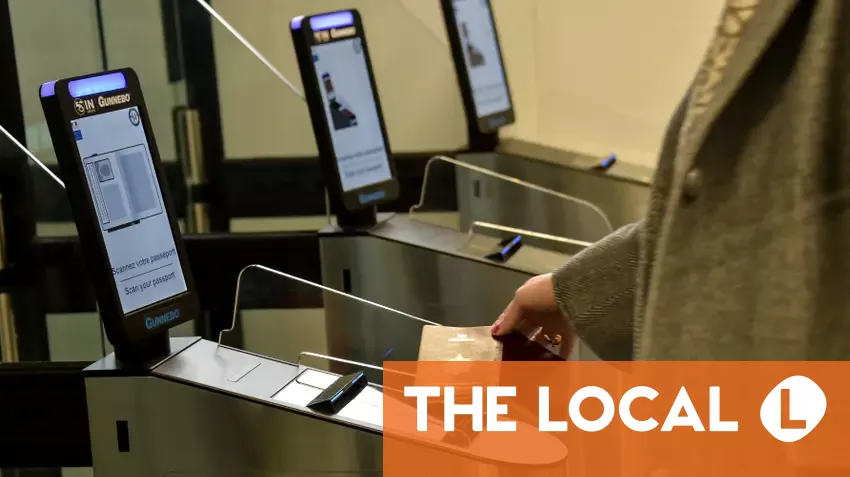
- Technical and maintenance failures with the new self-service kiosks.
- Limited use of automated border control gates.
- Unreliability of the central EU IT system.
- Lack of a pre-registration app, which is only available in Sweden and Portugal, forcing all checks to be done on arrival.
Calls for Flexibility and Traveler Advice
In response, ACI Europe and A4E are urgently calling on the European Commission and member states to extend the flexibility to suspend EES checks. They want this option available for the entire 2026 summer season and potentially into the winter.
The European Commission has indicated some leniency. A spokesperson stated that after the rollout, member states could partially suspend EES operations for an additional 90 days, with a possible 60-day extension to cover the summer peak.
"This will give Member States the necessary tools to manage potential extended queues," said Commission spokesperson Markus Lammert.
Travelers are already being advised to plan for major delays. Last week, the UK government warned British tourists heading to the Schengen area over Easter to allow significant extra time and follow their travel operator's guidance, especially if they have connecting flights.
The EES is designed to strengthen border security by digitally recording the entry and exit of non-EU visitors, enforcing the 90/180-day rule, and catching over-stayers. However, its turbulent implementation is now testing the patience of travelers and the capacity of Europe's travel infrastructure.