Key Takeaways:
- An EU delegation met with Taliban officials in Brussels for the first time, focusing on stepping up returns of Afghan nationals without legal stay.
- The meeting co-chaired by Sweden included 15 EU member states, drawing sharp criticism from rights advocates and Nobel laureate Malala Yousafzai.
- Belgium restricted the Taliban delegation's movement to just one day and limited to Belgian soil, not the Schengen zone.
A Diplomatic Gamble on Migration
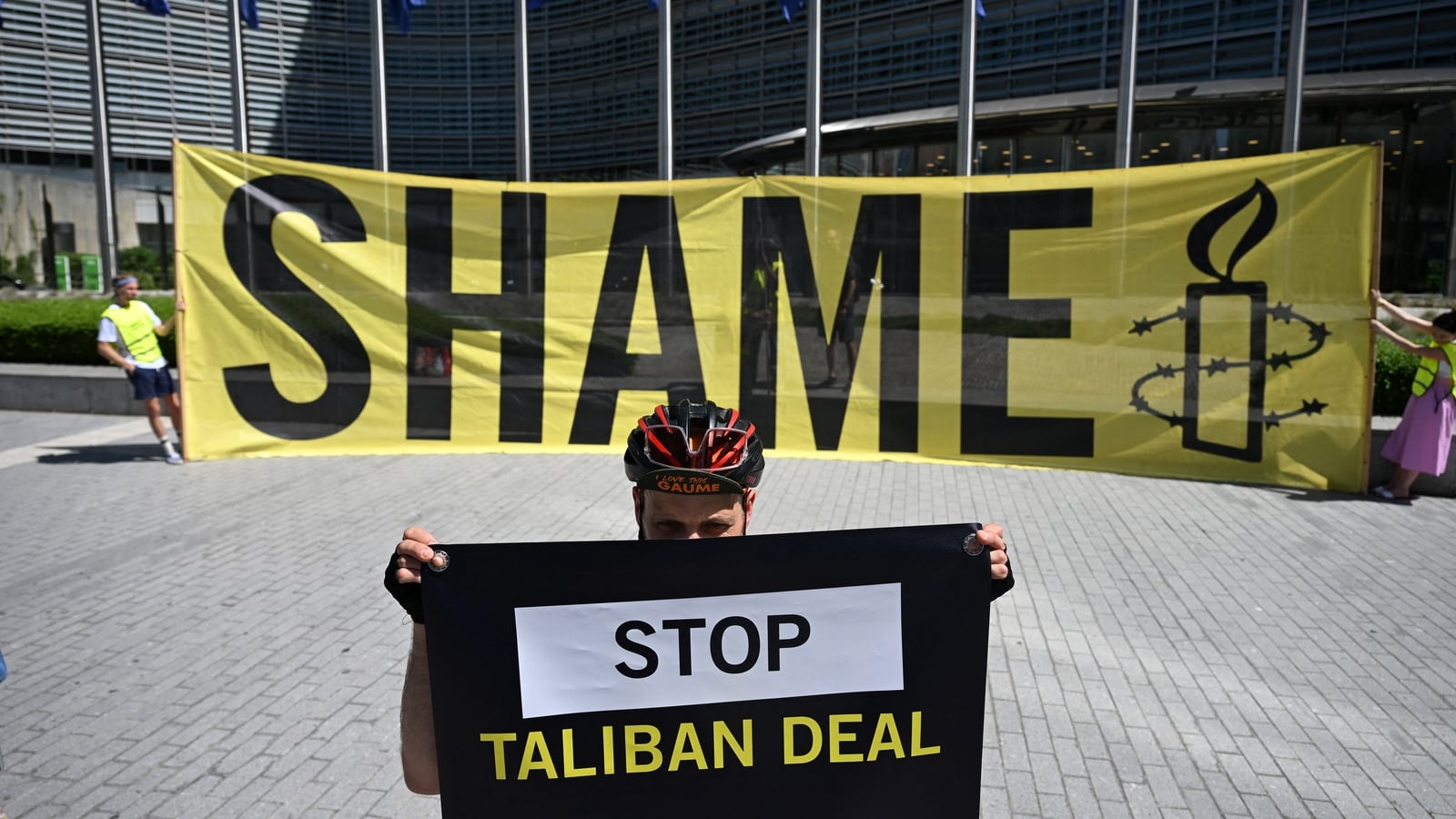
The European Union has long walked a tightrope between security and values, but a recent meeting in Brussels has tipped the scales. A Taliban delegation sat down with EU officials on June 22, 2026, to discuss accelerating the return of failed asylum-seekers from Europe to Afghanistan. For the first time, this dialogue took place on EU soil, a move that has sent shockwaves through human rights circles.
While the EU and its 27 member states have not formally recognized the Taliban government since it seized power in 2021, Brussels insists these are purely "technical-level" talks. The aim, according to a European Commission spokesperson, is to hammer out procedures for deporting individuals who have committed crimes or are deemed security threats. “The commission services and Sweden co-chaired a technical-level meeting today in Brussels with technical-level representatives of the de facto authorities of Afghanistan responsible for return and readmission,” the spokesperson stated.
But the Taliban's own narrative paints a broader picture. Abdul Qahar Balkhi, a spokesperson for Afghanistan's Foreign Ministry, framed the agenda as encompassing a potential consular presence in the EU and the resumption of services for Afghans abroad. “The meeting raised hope to build positive momentum to safeguard consular rights of Afghans residing abroad,” he added. This disconnect highlights the fragile, contested nature of the engagement.
Human Rights Backlash and Malala’s Condemnation
Criticism was immediate and biting. Afghan Nobel Peace Prize winner Malala Yousafzai took to X, formerly Twitter, to voice her shock: “The EU has invited Taliban officials to Brussels to discuss a migration deal — and today I am shaken and deeply disturbed by this. This is the same Taliban that banned girls from secondary schools and forced them into marriage.”
Rights groups argue that any interaction with the Taliban legitimizes a regime that has systematically dismantled women's rights, enforced brutal morality laws, and restricted freedom of movement. The EU, which prides itself on upholding democratic values, is now accused of prioritizing border control over principles.
“The most obvious and dangerous consequence is that Afghans will be returned from the EU, and will face persecution from the Taliban after their arrival,” warned Jeff Crisp, a visiting fellow at the University of Oxford and former head of policy at UNHCR.
Legal and Logistical Tightropes
To manage the controversy, Belgium imposed strict conditions on the Taliban delegation. Their visas were valid for only one day, and they were confined to Belgian territory, barred from normal free movement within the Schengen zone. This reflects the deep unease among EU member states about granting any form of recognition.
Yet, the meeting itself is a follow-up to a January 2026 session in Kabul, signaling a slow but deliberate shift in EU policy. The fact that 15 member states participated suggests a growing consensus that deportations are a practical necessity, even if ideologically uncomfortable.
What This Means for Travelers and Expats
For Afghans in the EU, this meeting raises immediate concerns. Those with pending asylum applications or temporary protection status may face increased scrutiny. The EU is signaling that failed applications will lead to swift, coordinated returns — but the question remains: what happens to deportees in a country where the Taliban control every aspect of life?
European travelers should also note that this engagement does not imply open diplomatic relations. The Taliban’s presence in Brussels does not mean easier visa processes for Afghan nationals or safer conditions in Afghanistan. For now, the EU’s position remains one of practical necessity, not political endorsement.
The Bigger Picture: EU Border Policy vs. Human Rights
This episode is a microcosm of a larger struggle within the EU: balancing the need for effective border enforcement with a commitment to human rights. Since 2015, the EU has struggled to create a unified asylum system. Deals with countries like Turkey and Libya have been criticized for compromising on rights, but the Taliban talks take this to a new level.
The meeting also underscores how the EU’s migration policy is increasingly divorced from its foreign policy. By engaging with the Taliban, Brussels risks alienating Afghan civil society and women’s rights defenders. Yet, the alternative — letting deportations stall — creates its own problems, including legal limbo for migrants and political pressure from anti-immigration factions.
What’s Next?
The EU plans to continue these technical dialogues, with the next meeting likely in Kabul. For now, the focus remains on return logistics, but the Taliban’s demand for consular services could complicate matters. If the talks expand, they may force EU member states to confront a difficult choice: normalize relations to facilitate returns, or stick to a principled stance of non-recognition.
For readers planning trips to Europe, this situation has no immediate impact on travel rules. But it serves as a reminder that border policies are never just about logistics — they are about the values a society chooses to uphold.