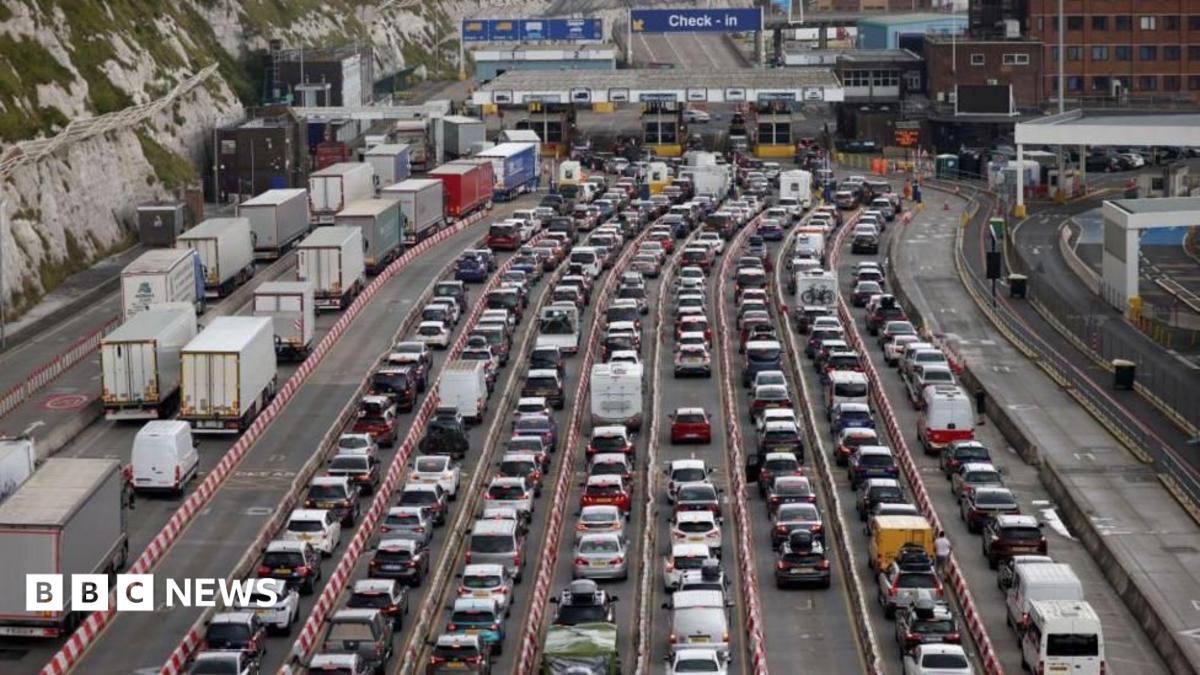
The Port of Dover has done "absolutely everything" to prepare for the summer getaway amid fears of more delays from new EU border checks, its boss said.
Doug Bannister, chief executive of the Kent port, said it was "very disappointing" a new Entry Exit System (EES) processing facility – built as part of a £40m investment – was not being used for cars because the technology had not been activated.
EES, rolled out fully in April, involves passengers having their fingerprints registered and photograph taken to enter the Schengen Area. For most UK travellers, the process happens at foreign airports, but it is also carried out at the Port of Dover, Eurotunnel's Folkestone terminal and London St Pancras railway station, which all have juxtaposed border controls.
Critical Incident Already Declared
The port declared a "critical incident" in May half-term after waiting times reached four-and-a-half hours on a day with about 8,500 outbound vehicles. Bannister recently told MPs the port would “face repeated episodes of severe congestion” this summer unless the EU permits more flexibility in EES, which had not happened.
Most schools in England and Wales break up for the summer holidays at the end of this week or early next week, while the academic year has already ended in Scotland and Northern Ireland.
What Travellers Can Expect
- The Port of Dover expects about 7,500 outbound cars on Friday, rising to nearly 10,000 on Saturday.
- The end of next week will be even busier, with about 10,500 outbound cars on both 24 and 25 July.
- It was previously hoped many of these would complete their EES registrations at the new Western Docks facility, which is equipped with 84 kiosks to record biometric details.
- But the French authorities have not switched the kiosks on, and no date has been set for when that will happen.
The Technology That Could Help
The £40m investment was designed to streamline EES processing, allowing passengers to pre-register fingerprints and photos before reaching French border officers. Instead, the process remains manual, with each car needing to stop for individual checks – a bottleneck that turns a 90-minute crossing into an ordeal.
"We have done absolutely everything possible to prepare," Bannister emphasised, urging EU officials to activate the kiosks or allow more flexibility in how biometric data is collected.
Broader Implications for Travel
This is not just a local problem. EES applies to all non-EU nationals, including UK citizens, entering the Schengen Area. Similar delays could occur at other Channel ports and St Pancras if technology remains inactive. The European Commission has not commented on the delay, but travellers should plan for extra time.
Key Takeaways:
- Check your passport validity and have required documents ready.
- Allow 4-5 hours for border processing at peak times.
- Monitor Port of Dover and Eurotunnel social media for live updates.
- Consider alternative routes or travel dates if possible.
The summer of 2024 may be a test of patience for millions heading to Europe – and the technology meant to ease their journey remains idle.