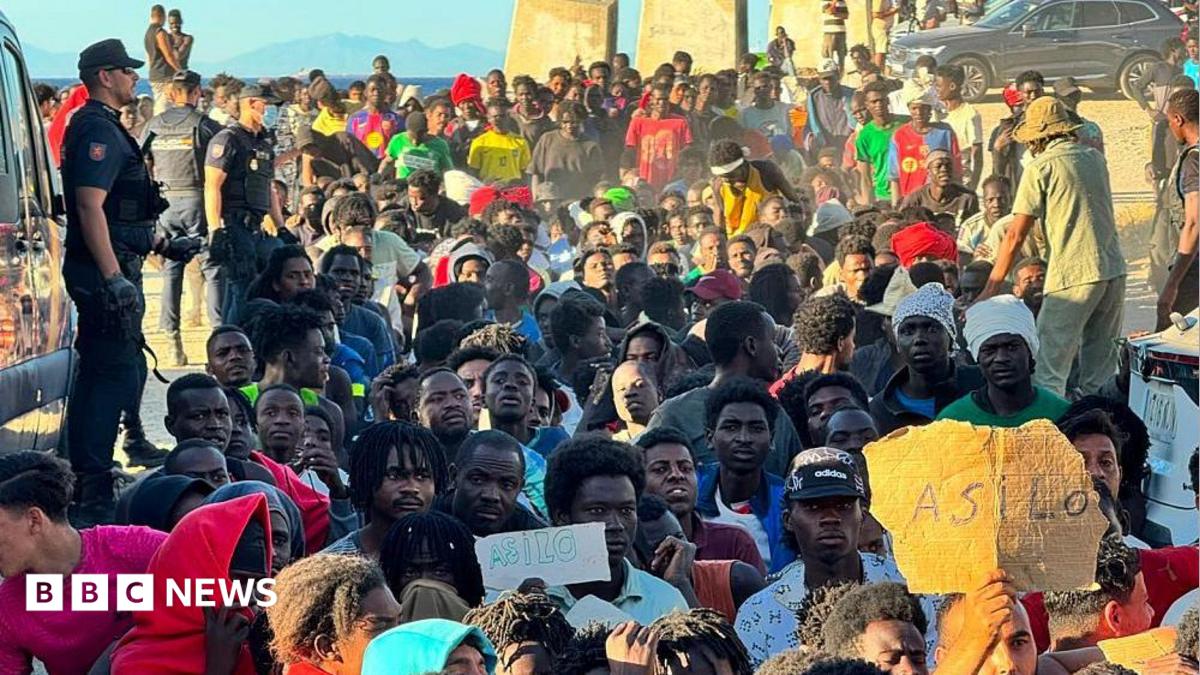
The European Union has rallied behind Spain following the unprecedented migrant surge in Ceuta, praising Madrid's 'swift response' during an emergency meeting of interior ministers on Tuesday. The crisis, which saw around 72,000 people cross into the Spanish North African enclave in just 48 hours, has tested the bloc's unity and sparked a rare suspension of Schengen rules by Italy.
Spain's Interior Minister Fernando Grande-Marlaska confirmed that most of the migrants have already been returned to Morocco, with an estimated 70,000 sent back. However, the human toll remains stark: at least 75 people died on the Spanish side of the border, and 11 more in Morocco. The images of crowds on the beach and the desperate swim to European soil have reignited a fierce debate about migration, border security, and solidarity within the EU.
Key Takeaways
- 72,000 migrants crossed into Ceuta from Morocco on 30-31 July; most have been returned.
- Italy suspended Schengen checks with Spain, a symbolic but significant move.
- The EU has offered emergency financial support and praised Spain's handling.
- The crisis was likely fueled by social media disinformation and criminal networks.
- Concerns remain for unaccompanied minors and the rights of those still waiting.
A Test for European Solidarity
The meeting, chaired by Irish Justice Minister Jim O'Callaghan, was called after several EU nations voiced concern over Spain's management of the crisis. Italy's Prime Minister Giorgia Meloni called the influx 'uncontrolled immigration' and a security threat, while the Czech Prime Minister Andrej Babiš even suggested a temporary suspension of Spain's Schengen membership. Italy, Denmark, and 20 other countries later sent a formal letter expressing their unease.
Despite the initial tension, the bloc closed ranks. O'Callaghan emphasized that migration requires 'a united European response' and that the EU stood in solidarity with Spain. EU Commissioner Magnus Brunner called the incident a 'test' of European resilience, which he said it had successfully 'passed.' He also announced emergency financial aid to help Spain strengthen its borders.
What Does Italy's Schengen Suspension Mean?
Italy's decision to suspend the Schengen agreement with Spain, while largely symbolic given no shared land border, has practical implications for air travel. Passengers flying between the two countries may face additional identity checks. This marks a rare break in the Schengen zone, which normally guarantees border-free travel for over 450 million people across 29 countries.
Spanish Prime Minister Pedro Sánchez responded sharply, accusing some governments of acting on 'prejudice, fake news, ignorance, or political interest.' He pointed out that Ceuta itself is not part of the Schengen area, a legal nuance that complicates the debate.
The Human Stories Behind the Numbers
Beyond the political maneuverings, the crisis is a deeply human one. Migrants like Ayoub, a 23-year-old from Casablanca, risked their lives swimming across the border. He described it as 'the most traumatic experience I've ever had in my life,' but insisted, 'I haven't risked my life for nothing, I want to be free.'
Others, like Djibril from Senegal, criticized the lack of response from Spanish authorities. 'We're not thieves,' he told RTVE. 'But leaving us without a response is inhumane. For five days you've left people on your territory. They're not eating, they're not showering, they're ill.'
Unaccompanied Minors at Risk
Among the most vulnerable are an estimated 800 unaccompanied minors, who are being held in facilities across Ceuta. Spain has allocated around €25 million ($28.8 million) to support them. Interior Minister Grande-Marlaska insisted that the rights of all migrants, especially minors, are being respected.
What Triggered the Mass Crossing?
The exact cause remains unclear, but EU officials point to criminal networks and social media disinformation. A recent Spanish Supreme Court ruling, which barred the summary return of migrants stopped at sea, may have been a factor, despite Moroccan warnings. Spain's government rejected claims it had prior intelligence about the scale of the influx.
As Ceuta slowly returns to normal, with aid groups distributing food and some migrants sleeping on the streets, the question remains: what happens next? Spain has vowed to work 'firmly' with Morocco to prevent future border violations and to return any remaining migrants. But for those still waiting, the uncertainty is agonizing.
'We live in front of the beach,' said Kamal, a 24-year-old from Sudan. 'No food, nowhere to sleep, not even blankets to warm up from the cold.'
The Ceuta crisis has exposed the delicate balance between compassion and control. As the EU supports Spain, it also faces a broader challenge: how to maintain open borders while ensuring security. The coming weeks will reveal whether this 'test' truly strengthens European unity or merely papers over deep divisions.