Key Takeaways:
- Spain’s amnesty for undocumented migrants received over 1.3 million applications, more than double initial estimates.
- Over 360,000 provisional residency permits issued by mid-June, with final regularizations expected around 900,000.
- The program contrasts sharply with EU-wide crackdowns, sparking tensions with Italy over Schengen zone impacts.
Record-Breaking Amnesty in Spain
Spain has launched what is now the largest regularisation scheme for undocumented migrants in European history. By late June 2026, the government reported at least 1.3 million applications—a figure that stunned officials who initially expected only 500,000.
Prime Minister Pedro Sánchez hailed the amnesty as an “act of justice,” aiming to integrate long-term undocumented residents into the formal economy while addressing chronic backlogs in Spain’s immigration system. The program opened on April 16, with a Tuesday deadline for submissions.
“This is about dignity and economic sense,” Sánchez stated, though critics warn it could encourage further illegal migration.
Who Qualifies? Simple Criteria, Massive Response
To be eligible, undocumented migrants had to meet specific conditions:
- Residency in Spain since January 1, 2026.
- A clean criminal record.
- Proof of five consecutive months of living in the country.
By mid-June, 360,000 applicants had already received provisional residency permits, valid for one year. The Spanish Commission for Refugees (CEAR) predicts the final number of regularizations will reach around 900,000 after weeding out duplicates.
Mauricio Valiente, CEAR’s chief executive, noted: “The percentage of approvals is very high because requirements are straightforward.” Special provisions allow migrants struggling to obtain criminal record certificates from their home countries—common among those from Colombia or Senegal—extra time to comply.
A Contrast with EU Migration Trends
This amnesty marks a sharp departure from the rest of Europe. While Spain opens its doors, other nations—led by conservative leaders—are tightening borders. Italian Prime Minister Giorgia Meloni has publicly clashed with Sánchez, arguing that Spain’s leniency could destabilize the Schengen zone by encouraging secondary movements.
“The amnesty undermines collective EU efforts to manage migration,” Meloni stated at a recent European Council summit. Spain’s opposition parties, the centre-right Partido Popular (PP) and hard-right Vox, also oppose the plan, warning it will act as a pull factor for more undocumented arrivals.
Economic and Social Implications
Spain’s move addresses a long-standing problem: a bloated asylum system with over 90% rejection rates, leaving 840,000 undocumented migrants in legal limbo, working off the books while waiting for residency. Think tank Funcas estimates this workforce is vital for sectors like agriculture and hospitality.
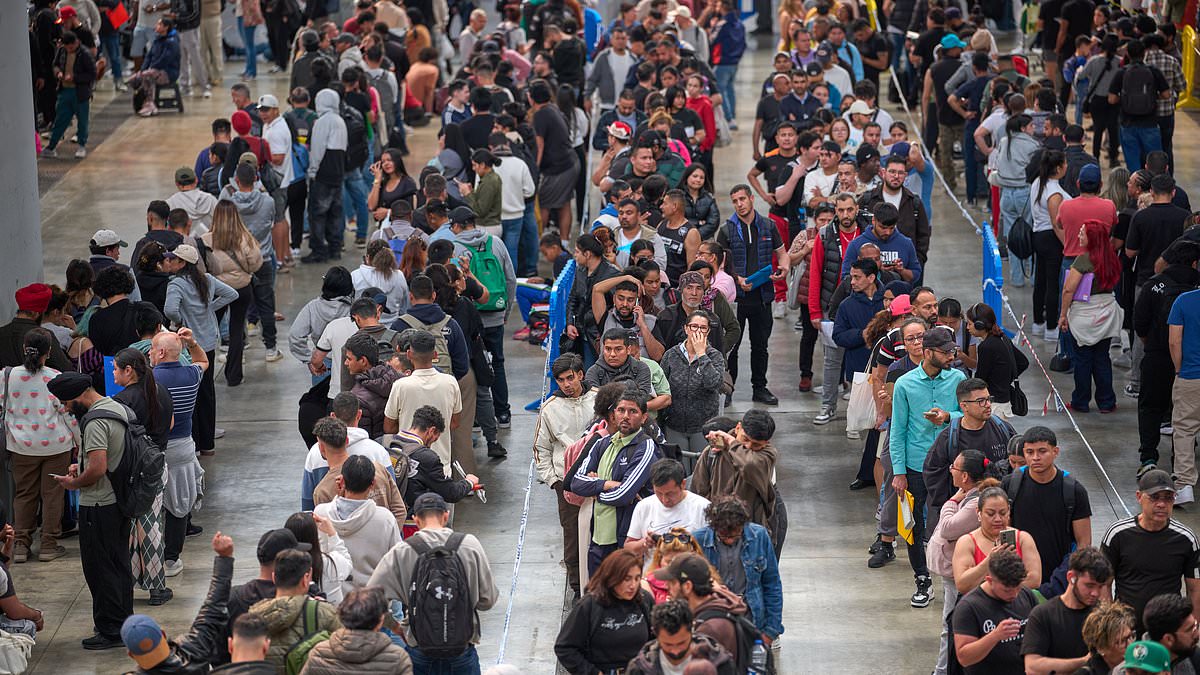
By regularizing these workers, Sánchez hopes to boost tax revenues and reduce labor exploitation. However, the sheer volume of applications has overwhelmed processing centers, where long queues formed after the announcement.
“The amnesty is a lifeline for thousands who have contributed to Spain’s economy for years without legal protection,” said Valiente.
What Happens Next?
Applications submitted by the June 30 deadline will be processed over the coming weeks, with decisions expected within three months. This wave of regularizations is set to surpass Spain’s 2005 amnesty (500,000) and Italy’s 2002 program (634,700), making it Europe’s biggest ever.
For Schengen and EU policy, the implications are significant. If successful, this model could challenge the bloc’s current deterrence-based approach. Yet, it also fuels fears of uncontrolled migration, putting pressure on Spain to prove that amnesty can be managed without undermining border security.
Final Thoughts
Spain’s amnesty is a bold experiment in migration management, offering a stark alternative to EU-wide crackdowns. For travelers and expats, it signals a potentially more flexible Spanish visa landscape. But the coming weeks will test whether this historic scheme achieves its goals—or fuels further political divisions within Europe.