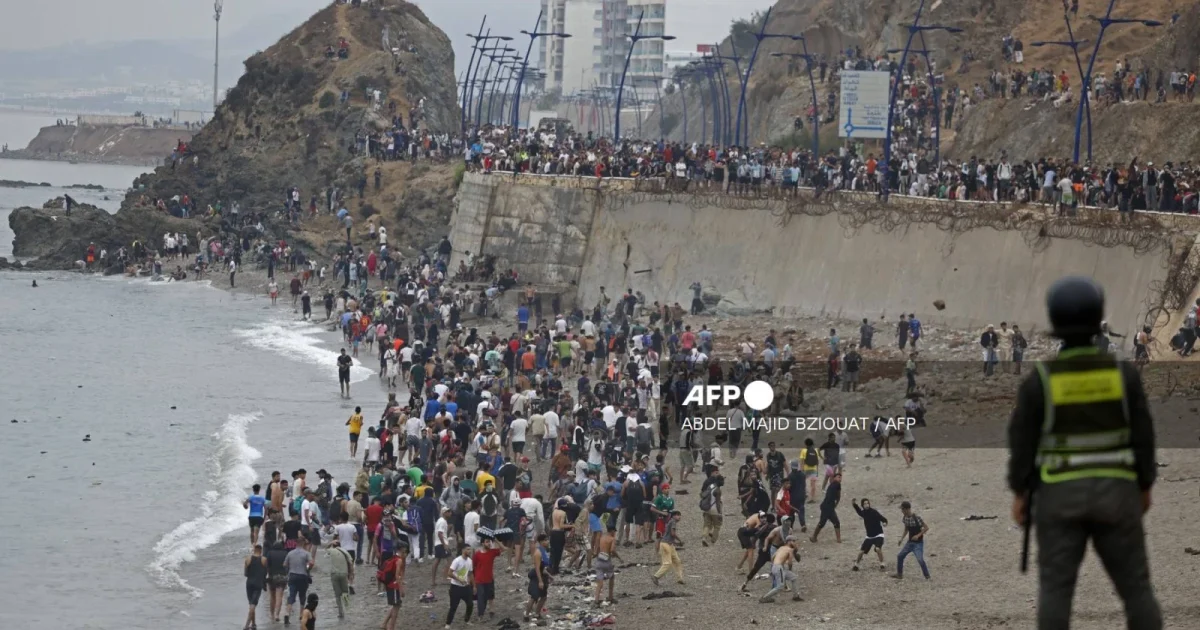
Spain's Prime Minister Pedro Sánchez has launched a blistering attack on fellow EU member states, calling their reaction to the migrant surge in the Spanish exclave of Ceuta "selfish, polarising and unlawful." The rebuke comes as the death toll from this week's mass crossing attempt rises to 67, with thousands still navigating the fallout along the Morocco-Spain border.
Authorities report that between 50,000 and 60,000 people attempted to breach the border on Thursday, many by land and sea, overwhelming guards and leading to drownings. The Spanish government, meanwhile, faces a delicate balancing act: enforcing territorial integrity while complying with a recent Supreme Court ruling that restricts summary deportations.
Key Takeaways
- At least 67 people died during the mass crossing attempt into Ceuta from Morocco.
- Spain's PM denounced EU partners' "selfish" response, including Italy's border controls and calls to suspend Spain from Schengen.
- The influx was fueled by social media misinformation about Spain's Supreme Court ruling on migration.
- Ceuta remains a flashpoint for EU migration policy, raising questions about the future of border controls and asylum procedures.
EU Solidarity Tested: Schengen Under Strain
The crisis has exposed deep fissures within the European Union. Italy temporarily reinstated border controls on travelers from Spain, and France's Interior Minister Laurent Nunez ordered enhanced checks along their shared border. Italian Prime Minister Giorgia Meloni went further, calling for Spain's Schengen membership to be suspended—a move that, if pursued, would fundamentally alter the free-movement zone.
Sánchez, in a letter widely circulated in European media, condemned such reactions as "driven by prejudice, fake news, ignorance or political interest." He insisted that "the European Union cannot afford this kind of selfish, polarising and unlawful reaction" in the current international context.
Meanwhile, Ireland, holding the bloc's rotating presidency, has called for an emergency meeting of national ministers. Irish Justice Minister Jim O'Callaghan stated he remains "in close contact with all EU Member states" and is "continuing to monitor the situation."
What Happened in Ceuta?
Ceuta, a tiny Spanish enclave on Africa's northern coast, became the epicenter of a migration shockwave. Thousands of people, mostly young Moroccans, surged across the border Thursday, many swimming or using makeshift rafts. The influx overwhelmed border guards, and the death toll rose as people drowned in the attempt.
By Friday evening, most of the 50,000 to 60,000 who attempted the crossing had returned to Morocco, authorities say. Many left voluntarily, citing lack of food and shelter in Ceuta, while others were pushed back or crossed back through gaps in the fence.
Spanish officials have vowed to expel those who entered irregularly, but a recent Supreme Court ruling complicates matters. The court barred summary deportations of migrants arriving by sea, insisting on due process. However, experts note the ruling is narrow and may have been misinterpreted by migrants and traffickers alike.
The Role of Social Media Misinformation
The surge was not spontaneous. Sixteen-year-old Moroccan Ayoub El Abyad told Reuters he traveled 12 hours to Ceuta after watching Instagram videos of other migrants crossing. "Migration is about improving our lives," he said. "We agreed we would try the idea of crossing and trust in God."
Those videos, along with rumors and fake news about the Supreme Court decision, created a false sense of opportunity. Traffickers exploited the confusion, spreading misinformation to drive desperate individuals toward the border.
Sánchez himself blamed the influx on "misinformation spread by people traffickers" following the ruling, calling it a "violation of Spain's territorial integrity."
Border Control Measures and the Floating Barrier
In response, Spain's Interior Ministry announced Saturday the installation of a floating barrier near the Tarajal breakwater, a key entry point into Ceuta. The move is designed to "comply with" the Supreme Court ruling while attempting to deter future crossings.
Yet the deeper issue remains: how to balance humanitarian obligations with border security in a Schengen area increasingly under strain. Third-country nationals in Ceuta do not enjoy free movement to mainland Spain or the rest of the bloc, and identity and visa checks are still required for onward travel.
What Does This Mean for Schengen and EU Migration Policy?
The Ceuta crisis is a litmus test for EU solidarity. Meloni's call to suspend Spain from Schengen, however symbolic, signals a hard-line shift in southern European politics. France's border checks, though temporary, underscore how quickly internal controls can return under pressure.
For travelers and expats, the implications are tangible: expect stricter border scrutiny, potential delays, and heightened political rhetoric around migration. For policymakers, the crisis highlights the need for a coherent EU-wide approach to migration, one that addresses root causes and combats disinformation rather than resorting to unilateral reactions.
As Sánchez warned, the EU "cannot afford" internal division in the face of such challenges. The emergency meeting of EU ministers will likely determine whether the bloc can forge a collective response—or if the cracks in Schengen will widen further.
For now, Ceuta remains a symbol of both resilience and fragility: a European border where the promise of free movement meets the harsh reality of its limits.