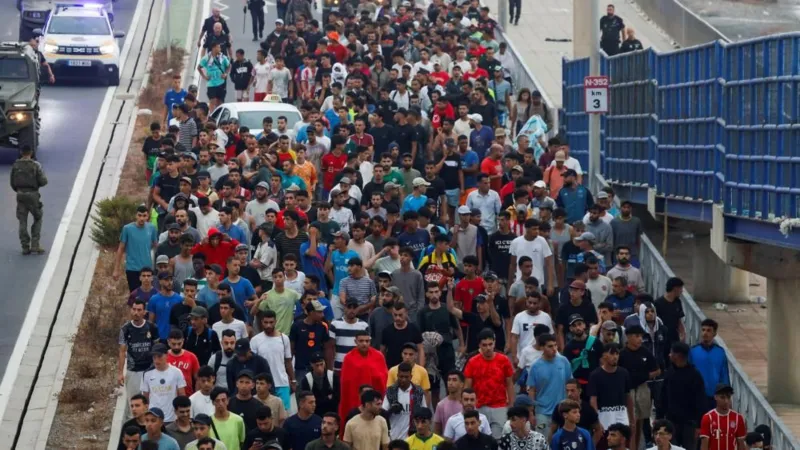
The European Union will hold an emergency meeting on Tuesday to address the escalating migration crisis in Ceuta, as diplomatic tensions between Spain and several EU member states reach a boiling point.
This urgent gathering follows an unprecedented surge where approximately 60,000 migrants attempted to cross into the Spanish enclave from Morocco. The crisis has prompted 22 EU countries to issue a joint letter demanding a coordinated response and stricter enforcement of the bloc's external borders.
Schengen Under Pressure
Spain has sharply criticized what it describes as "selfish, polarising and unlawful" reactions from fellow member states. The trigger for this backlash came when Italy suspended the Schengen border-free arrangement with Spain—a decision that received backing from Finland and Denmark.
Officials confirm that most migrants who entered Ceuta on July 30 have since returned, but the human cost remains heavy: the death toll linked to the crossing attempts has tragically risen to at least 67 people.
What's at Stake
The joint letter, signed by leaders from 22 nations including the Netherlands, Finland, and Belgium, warns of a dangerous precedent. If uncontrolled entry appears achievable, it could encourage further attempts and undermine confidence in the EU's common migration policy. The ripple effects would be felt across all member states.
The document was addressed to European Council President António Costa, European Commission President Ursula von der Leyen, and Irish Prime Minister Micheál Martin, as Ireland currently holds the rotating EU presidency.
Spain Fires Back
In a separate letter to von der Leyen, Spanish Prime Minister Pedro Sánchez voiced "serious concerns" about the response of certain European governments. He emphasized that Spain restored control of the border and prevented unauthorized movement toward mainland Europe within just 48 hours.
The crisis has exposed deep fractures within the EU's migration policy, pitting border states like Spain and Italy against each other precisely when unity is most needed.
Key Takeaways:
- EU emergency meeting scheduled for Tuesday to address the Ceuta crisis
- 22 of 27 member states demand stronger external border protections
- Italy's suspension of Schengen with Spain draws sharp criticism from Madrid
- At least 67 migrants have died during the crossing attempts
- Spain insists it regained control of the situation within two days
For travelers and EU citizens, this dispute raises critical questions about the future of freedom of movement within the Schengen Area. When member states unilaterally close borders, the entire framework of open travel is weakened—a precedent that could have lasting consequences for the continent's identity and cohesion.
The outcome of Tuesday's emergency meeting will likely shape EU migration policy for years to come. All eyes are on Brussels as leaders attempt to balance national sovereignty with the principles of solidarity and shared responsibility.