Key Takeaways:
- British travellers face border queues of up to five hours at EU airports this summer.
- The new Entry-Exit System (EES) requires biometric checks for non-EU citizens, causing severe delays.
- Aviation chiefs are urgently calling for a suspension of EES until September to avoid "complete standstill."
- Affected airports include major hubs like Paris CDG, Rome, Amsterdam, and popular holiday destinations like Tenerife and Malaga.
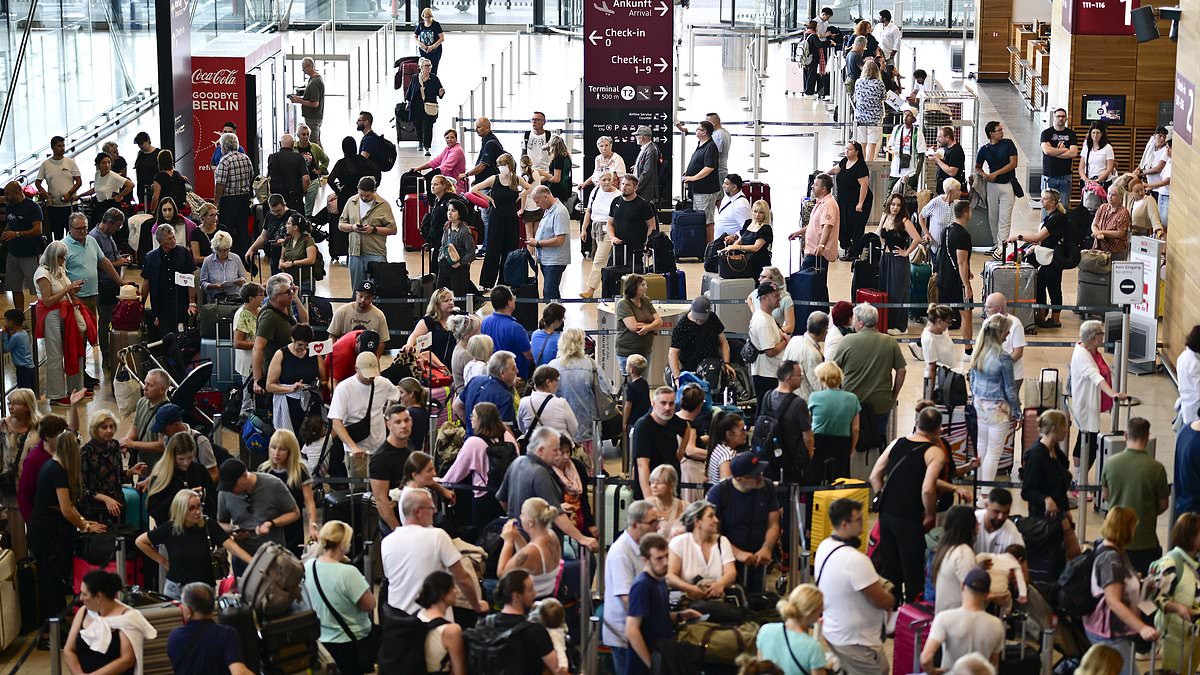
British holidaymakers heading to Europe this summer have been warned: expect border queues of up to five hours. The new Entry-Exit System (EES) , rolled out in April 2026, is causing chaos at airports across the Schengen Area.
Aviation chiefs describe the situation as "unsustainable" and are pleading with EU officials to pause the system until September.
What is the EES and Why is it Causing Delays?
The EES is a digital border system that requires non-EU citizens—including British travellers—to provide fingerprints and a photo upon first entry. These biometric details are then checked again on departure. While the system aims to enhance security and track overstays, its rollout has been plagued by technical issues and operational bottlenecks.
"Waiting times at border control have increased significantly, now reaching up to five hours during peak traffic periods," the European aviation sector (ACI) wrote in an open letter to European Commission President Ursula von der Leyen.
The ACI warned that airports could descend into a "complete standstill" as summer travel surges, with 40 million more passengers expected to pass through EU airports.
Airports and Airlines Under Pressure
The problem isn't limited to major hubs. Smaller airports serving tourist hotspots are also struggling. Passengers have been seen queuing "for extended periods outside terminal buildings and on exposed aprons because border control facilities cannot process arrivals quickly enough," the ACI noted.
UK airlines have identified the worst affected airports for 2026:
- Lanzarote, Tenerife South, Malaga
- Porto, Lisbon
- Amsterdam, Krakow
- Paris CDG, Rome
- Palma, Malta, Menorca, Milan, Naples, Budapest
Flight delays and missed connections are becoming common. "Airlines face half-empty planes at gate closing time, while passengers are stuck in border control queues," the ACI added.
Calls for a Temporary Suspension
The ACI has urged the European Commission to suspend the EES until September to allow airports to cope with the summer rush. They argue that reverting to standard Schengen border checks—including simple passport stamping—would alleviate the crisis.
Despite a partial suspension of biometric data collection, the ACI says the situation remains dire: "The move has not prevented excessive queues for passengers nor preserved airport and airline operations."
Is the System Working? A Clash of Views
European Commission officials have claimed the EES is "working well," attributing delays to "demand-driven airline scheduling." But the ACI strongly disputes this, stating:
"The success of EES cannot be measured solely by its technical deployment. It must also be judged by its ability to function effectively within the operational environment for which it was designed. At present, the system is failing to deliver one of its core objectives: facilitating efficient border crossings."
Ursula von der Leyen acknowledged last week that "there is still a lot to do" and that the Commission is working with member states to resolve technical issues.
Long-Term Benefits vs. Short-Term Pain
Most airlines agree the EES is necessary in the long run. The system has already caught 7,000 people who overstayed their visa-free periods. Similar digital border systems exist in the UK, US, and Australia.
However, the current implementation is problematic. Different EU member states have rolled out the system using various providers, leading to inconsistency and delays. Marco Troncone, CEO of Aeroporti di Roma, which operates Rome's Fiumicino airport, told The Times:
"We managed to optimise the process on our end bringing this to 90 seconds [down from two minutes] but it is still too high. This is of course not compatible with 50,000-60,000 passengers every day. The problem is related to the way this process has been designed."
What Should Travellers Do?
If you're flying to Europe this summer, arrive at the airport early—at least three hours before departure for non-Schengen flights. Consider avoiding peak travel times if possible. Check with your airline for updates on specific airports.
The coming weeks will be critical. Without intervention, the EES may turn Europe's summer of travel into a season of frustration.