Key Takeaways
- Spain has deployed armed forces to the North African enclave of Ceuta after thousands of migrants overwhelmed the border with Morocco.
- At least 18 people have died during the crossings, with bodies seen floating in the water as rescue operations continue.
- The crisis has triggered political fallout, including Italy's threat to suspend the Schengen Agreement with Spain.
- Morocco is cooperating with Spain to regain control, but the surge highlights deep vulnerabilities in Europe's border system.
A State of Emergency in Ceuta
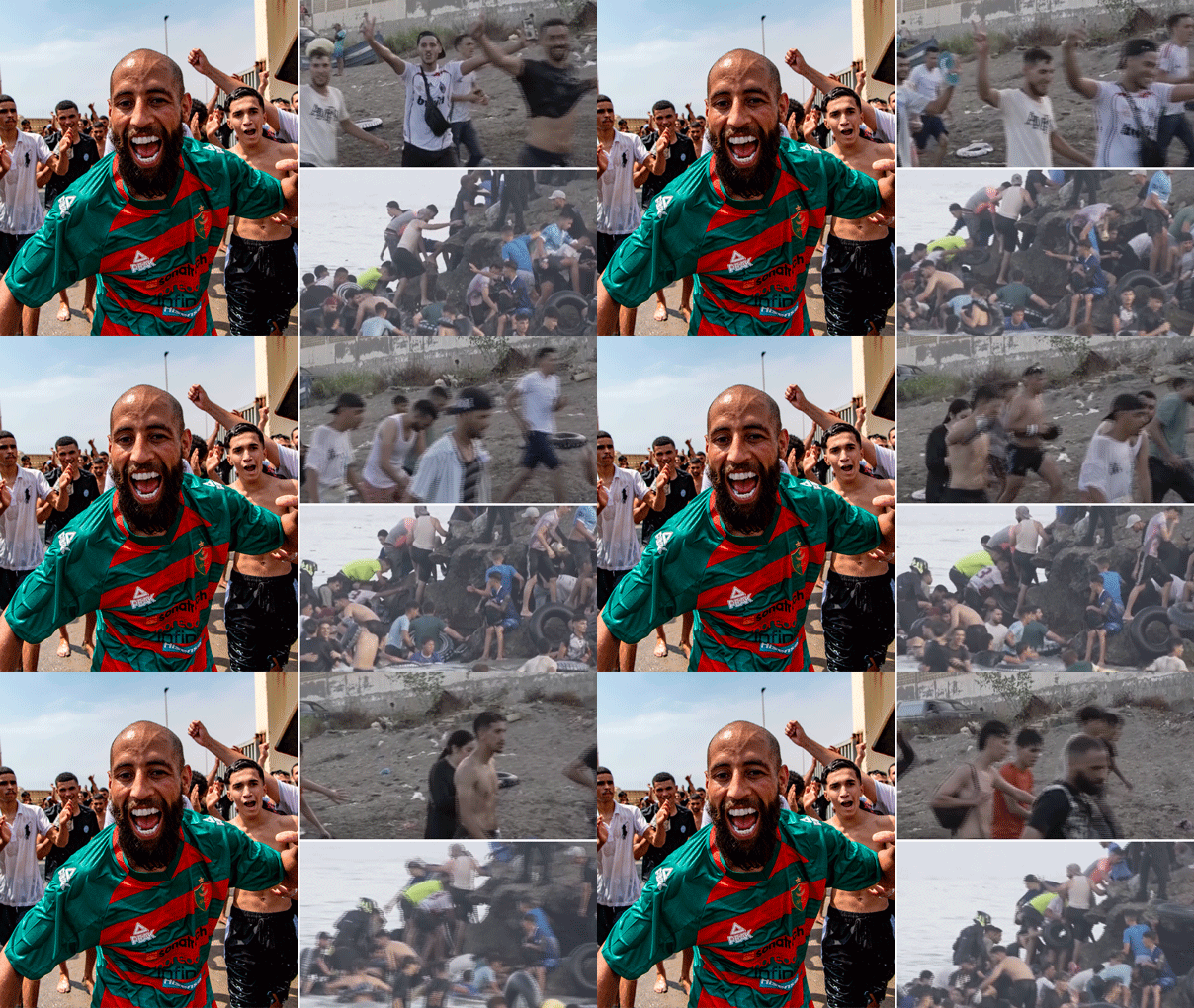
Ceuta, one of Spain's two North African enclaves, is facing its worst migrant crisis in years. On Thursday, thousands of migrants—many swimming around coastal barriers or crossing the Tarajal border area—overwhelmed local authorities, prompting Madrid to order military support for the Civil Guard.
Prime Minister Pedro Sánchez and Interior Minister Fernando Grande-Marlaska are expected to visit the territory as officials scramble to restore order. Local authorities say the city, with a population of around 85,000, simply cannot cope with the influx.
"The situation is absolute chaos," said Rachid Sbihi, head of a Civil Guard officers' association in Ceuta. "It's not possible to give precise numbers, but there are thousands of migrants crossing."
At Least 18 Dead, Many More at Risk
Spain's government delegation in Ceuta confirmed at least 18 deaths on Thursday, though the exact circumstances remain unclear. According to reports, bodies were seen in the water as rescue teams and security forces worked to bring the situation under control.
Most of the migrants appear to be young men, but families with women and children are also among those attempting the perilous crossing. The Spanish government has not yet provided a full casualty count, and the final toll could rise.
Why This Surge Is Different
The scale of this wave rivals the 2021 crisis, when more than 8,000 people entered Ceuta over two days, causing a diplomatic rupture between Spain and Morocco. This time, several factors are at play:
- A recent Spanish Supreme Court ruling that limits the immediate return of migrants arriving by sea, which may have encouraged some to attempt the crossing.
- Continued pressure from migration routes across Africa, with many people fleeing conflict, poverty, and climate instability.
- Possible gaps in border enforcement, despite Morocco's cooperation in intercepting migrants on its side.
Migration advocates, however, question whether the court ruling alone explains the sudden surge, pointing out that many migrants would likely not be aware of such legal changes.
Italy's Schengen Threat
The crisis has sent shockwaves through Europe. Italian Prime Minister Giorgia Meloni has threatened to suspend Italy's participation in the Schengen open-border agreement with Spain, citing the need to "defend our borders and ensure the safety of our citizens."
Such a move would be unprecedented in recent EU history and could have profound implications for the bloc's freedom of movement. It also underscores how a localized border event can quickly escalate into a continental political crisis.
The EU has already admitted it "didn't have control" over migration, and new stricter rules are being rushed in. But the Ceuta surge shows that the challenge remains acute.
A Flashpoint for Decades
Ceuta has long been a magnet for migrants from sub-Saharan Africa and the Maghreb, who attempt to scale the heavily fortified border fence or swim across the border. Before this week, Spanish authorities had recorded nearly 3,000 migrant arrivals by land or sea through mid-July—a figure that this week's crossings have already dwarfed.
The enclave, along with Melilla, serves as the only land border between Africa and the European Union. Its strategic location makes it both a symbol of hope for migrants and a persistent headache for European leaders.
What Happens Next?
Spain is now focused on restoring order and returning migrants to Morocco as quickly as possible. But the underlying factors driving migration remain unresolved. A long-term solution—if one exists—would require coordinated action across the EU, Morocco, and countries of origin.
For now, the focus is on stabilizing Ceuta and preventing further loss of life. But the broader question of how Europe manages its borders is far from answered.
This article is based on reporting from the Associated Press and other sources. For the latest updates, follow SchengenTracker.